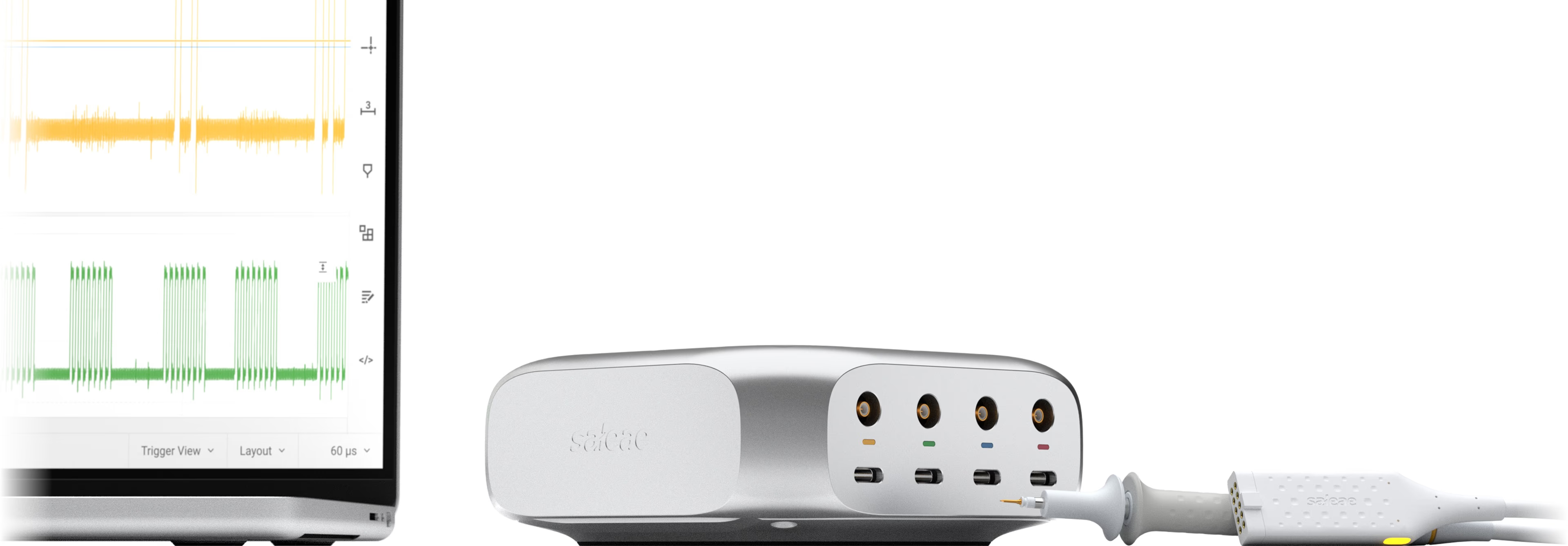
A 100/200 MHz scope with up to 20 channel logic analyzer.
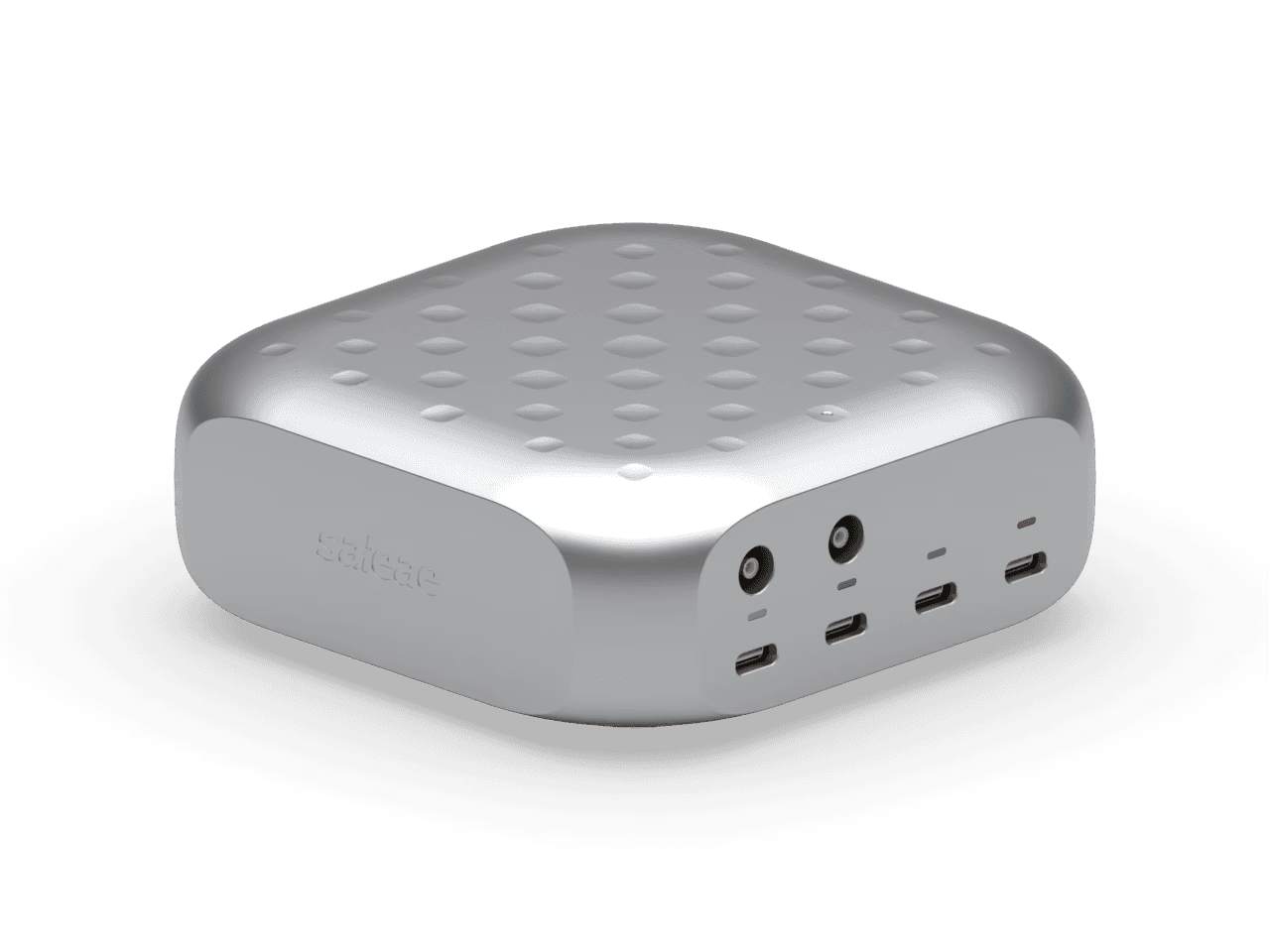
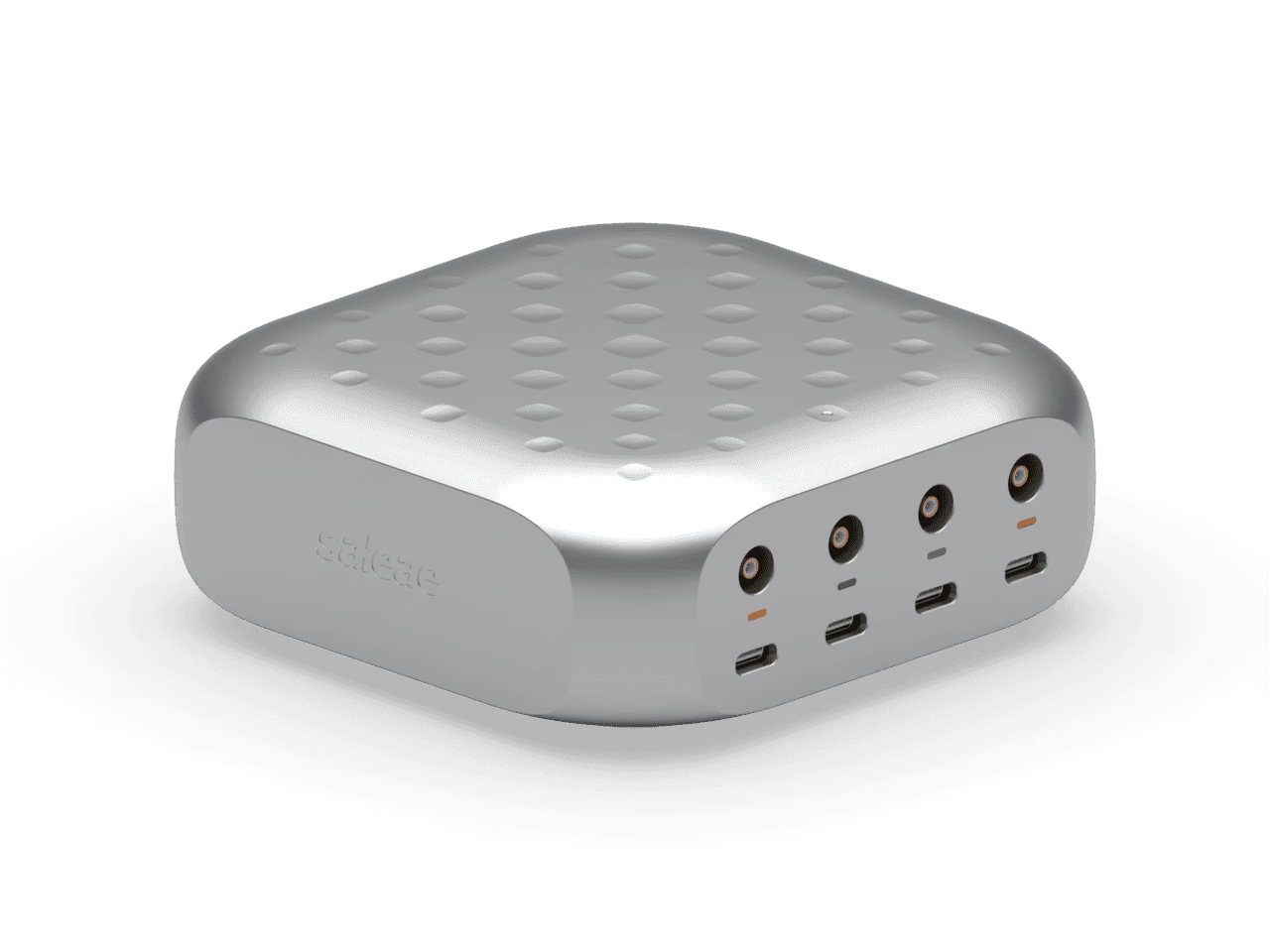
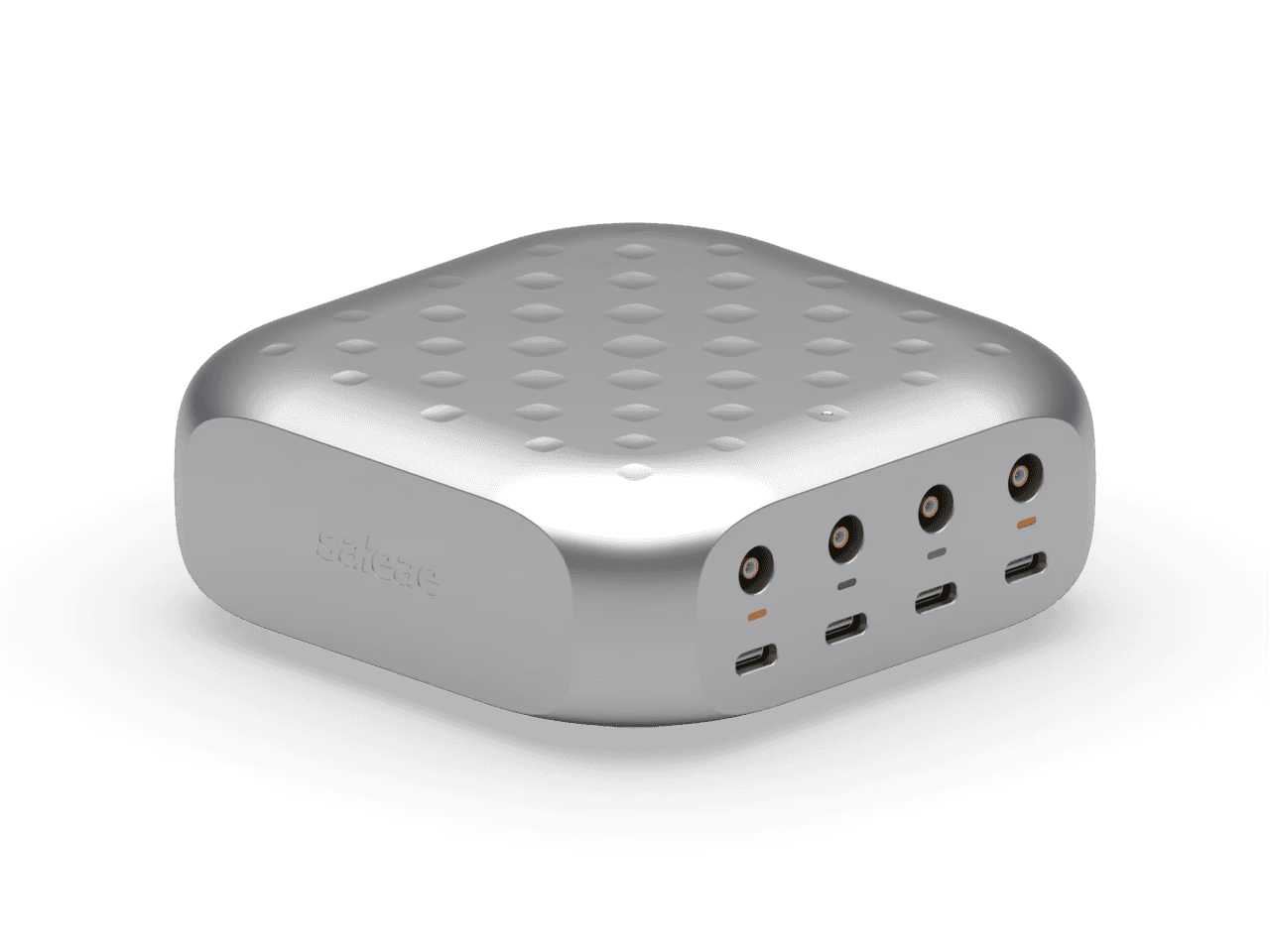
Ludicrously deep single-shot.
Capture up to 1 Billion samples on every channel simultaneously.
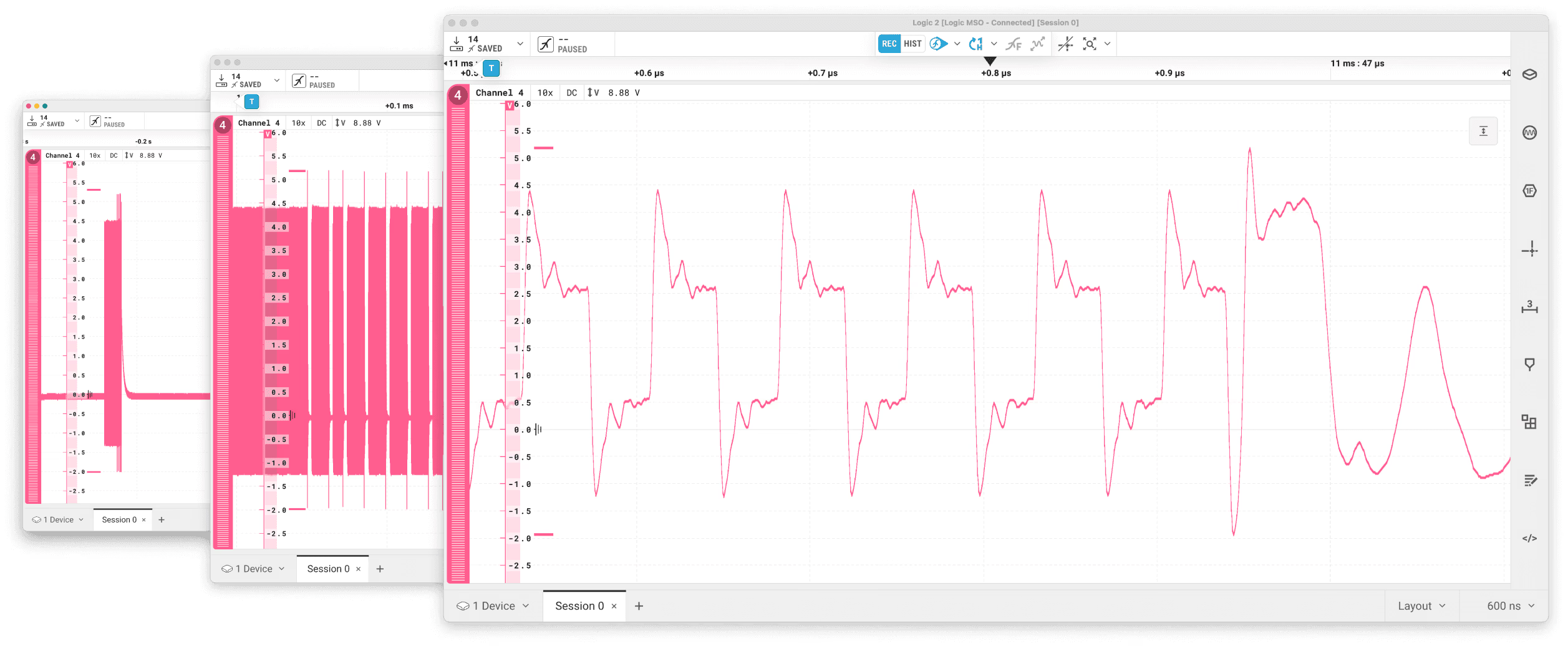
600 ns
600
s
600 ms
Finally, a scope with a first-class logic analyzer.
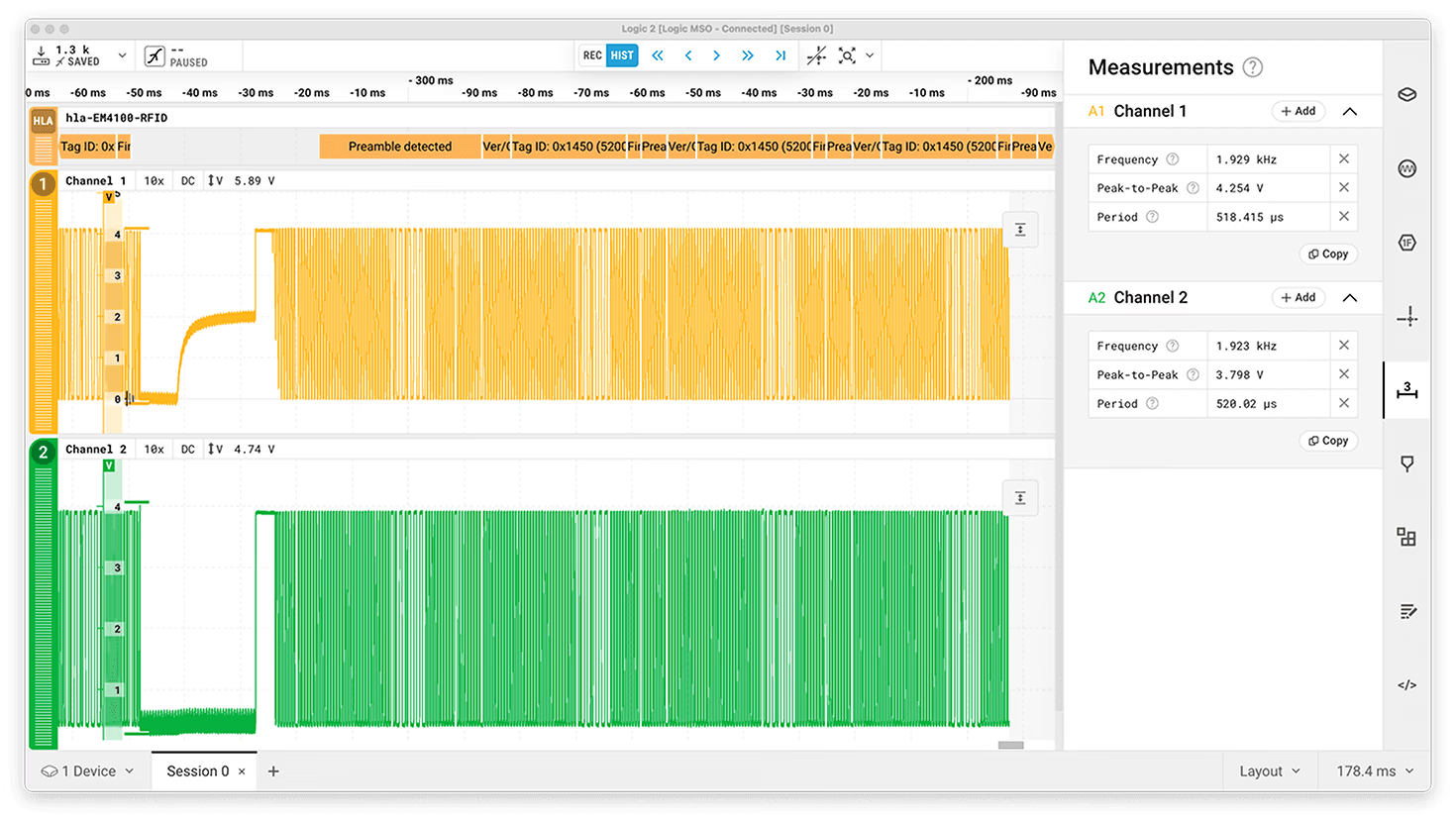
The only scope with an uninterrupted, continuous stream of decoded protocols and digital logic.
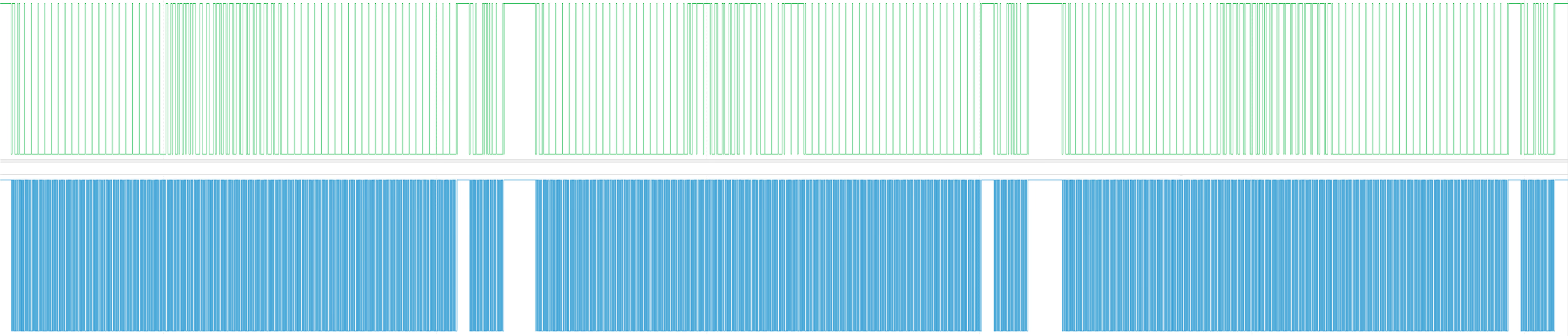
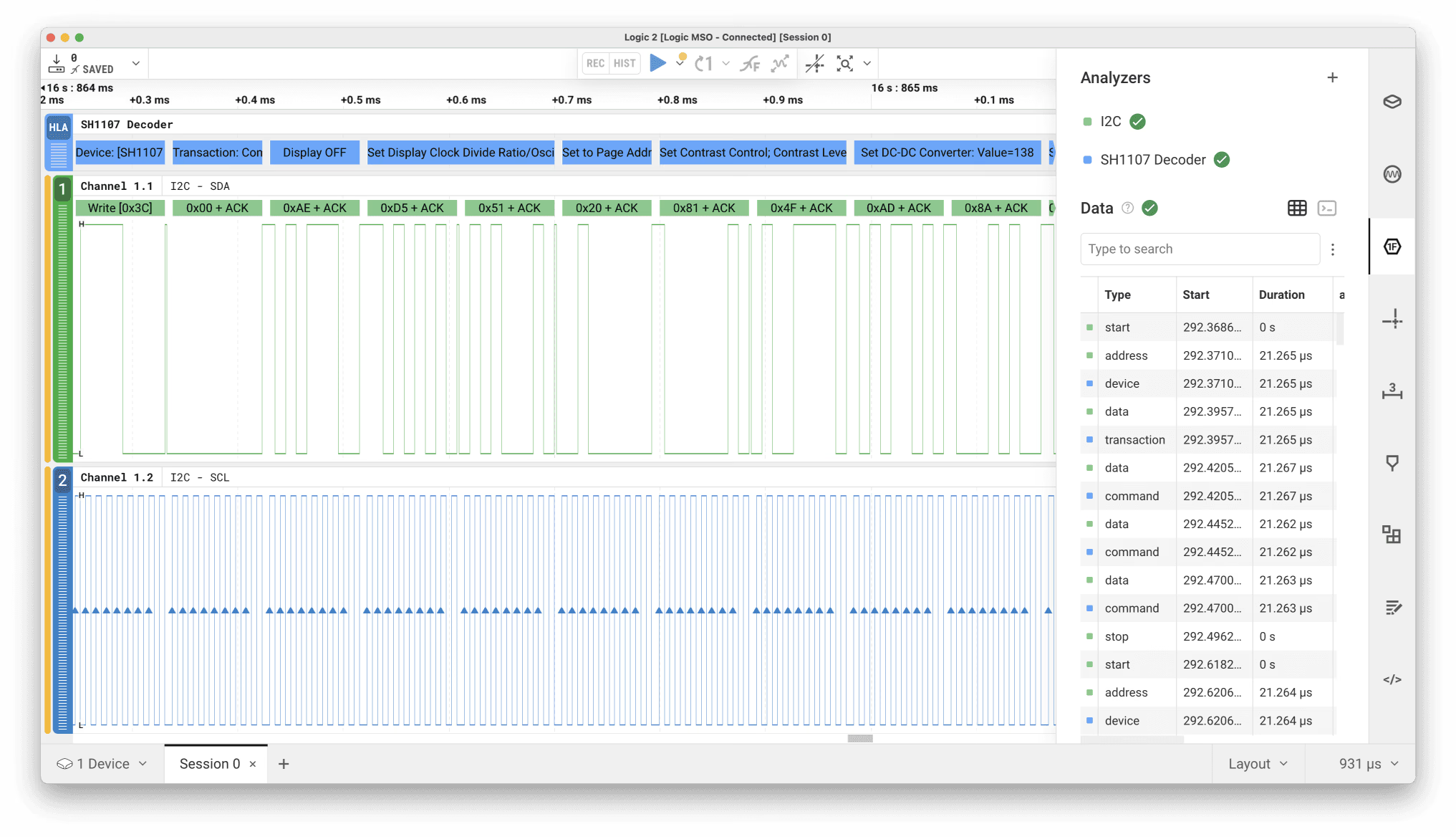
decode 25 protocols out of the box
(+tons of community analyzers)
'high level' &
'low level' decoders
record billions of transitions
search millions of
decoded messages
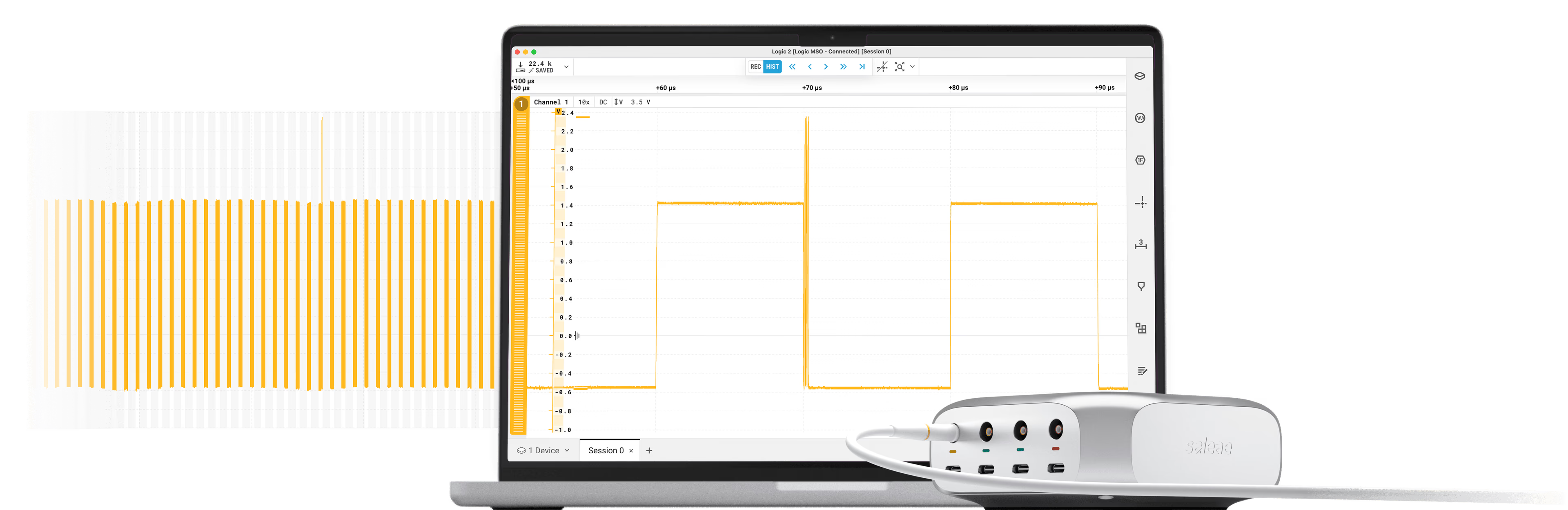
Saves every single waveform.
That weird thing that just happened? Go back and have a look.
Your benchtop scope: what you may miss 😭

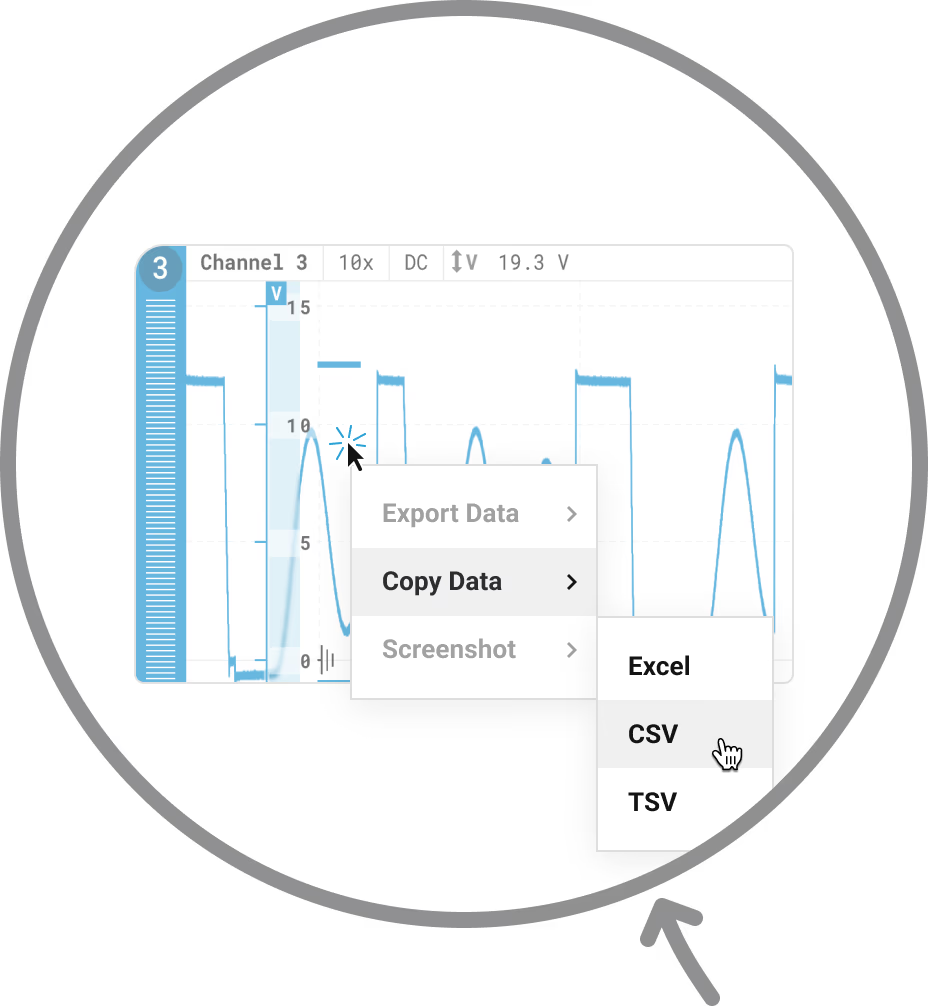
Taking "screen shots" (ahem…)
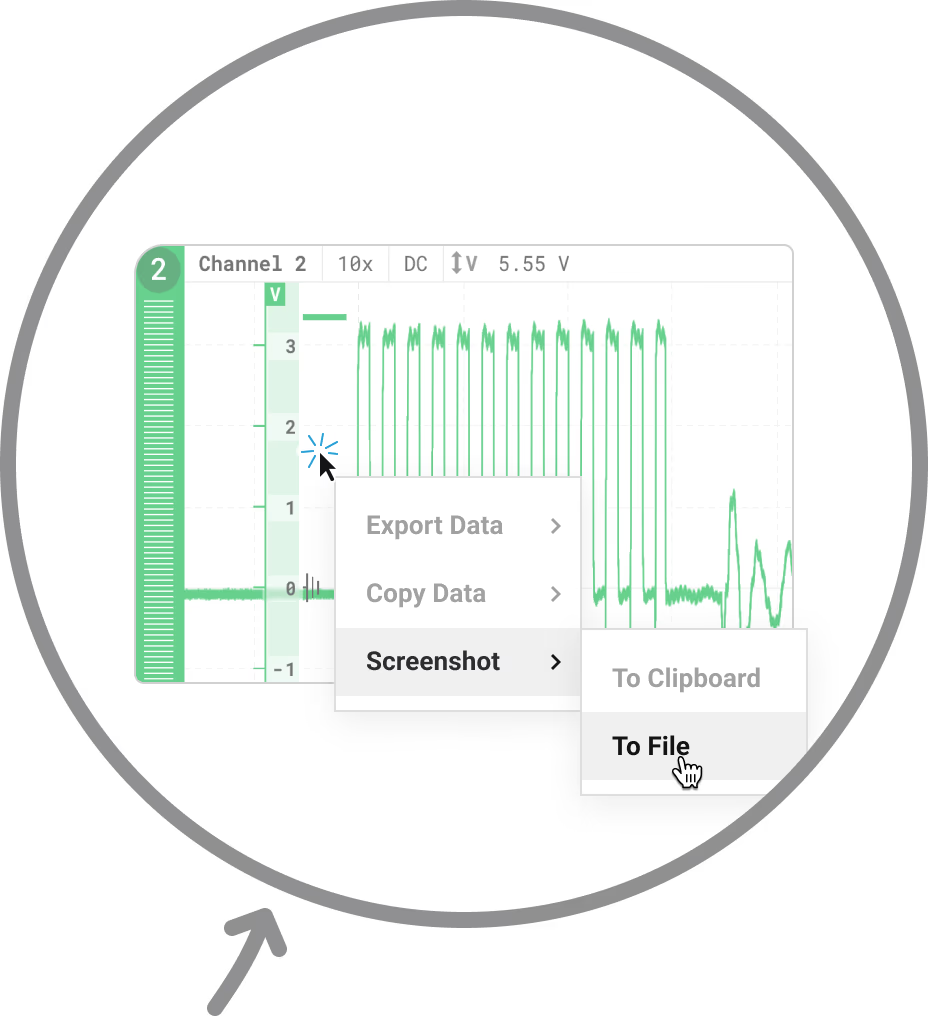
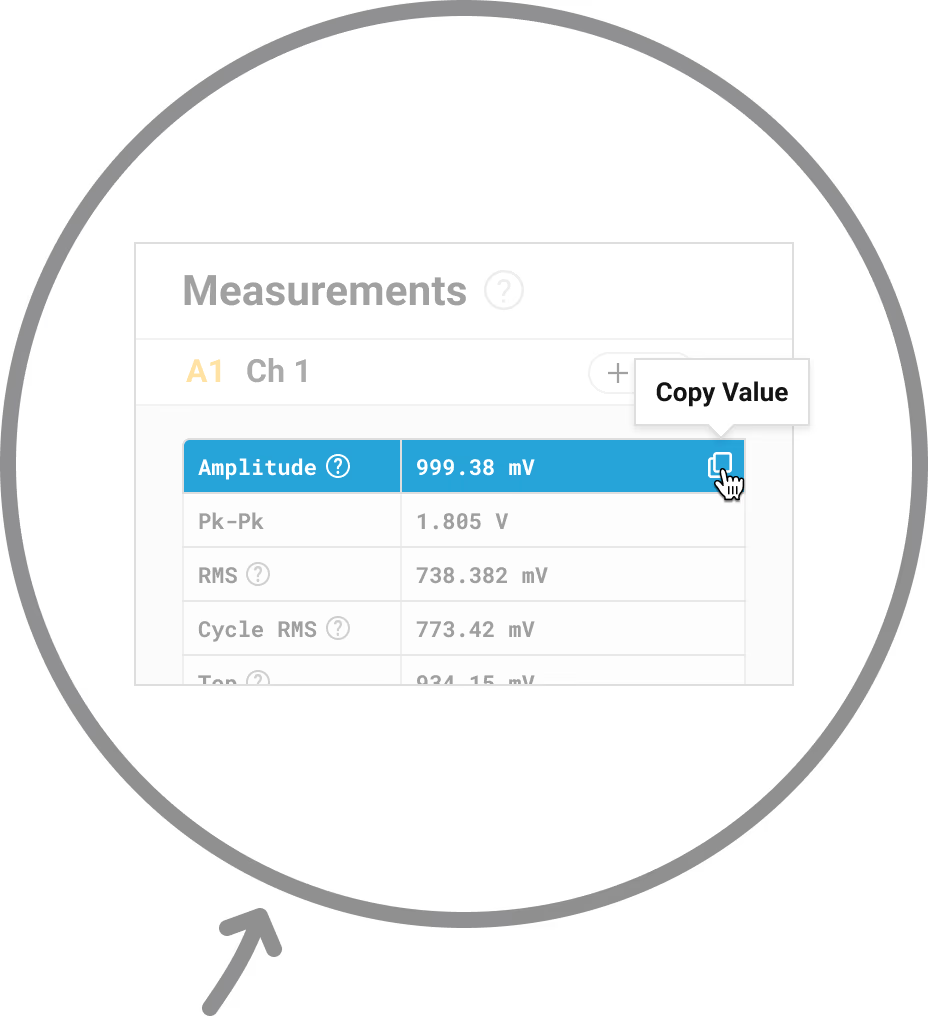
Typing in measurement results.
Using knobs to enter csv file names.
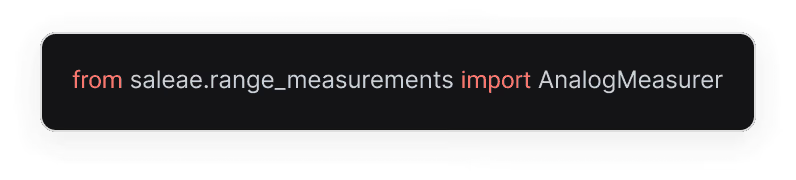
This scope runs Python.
Analyzers, measurements, and fully automated capture.

Here are all the specs.
General Specs
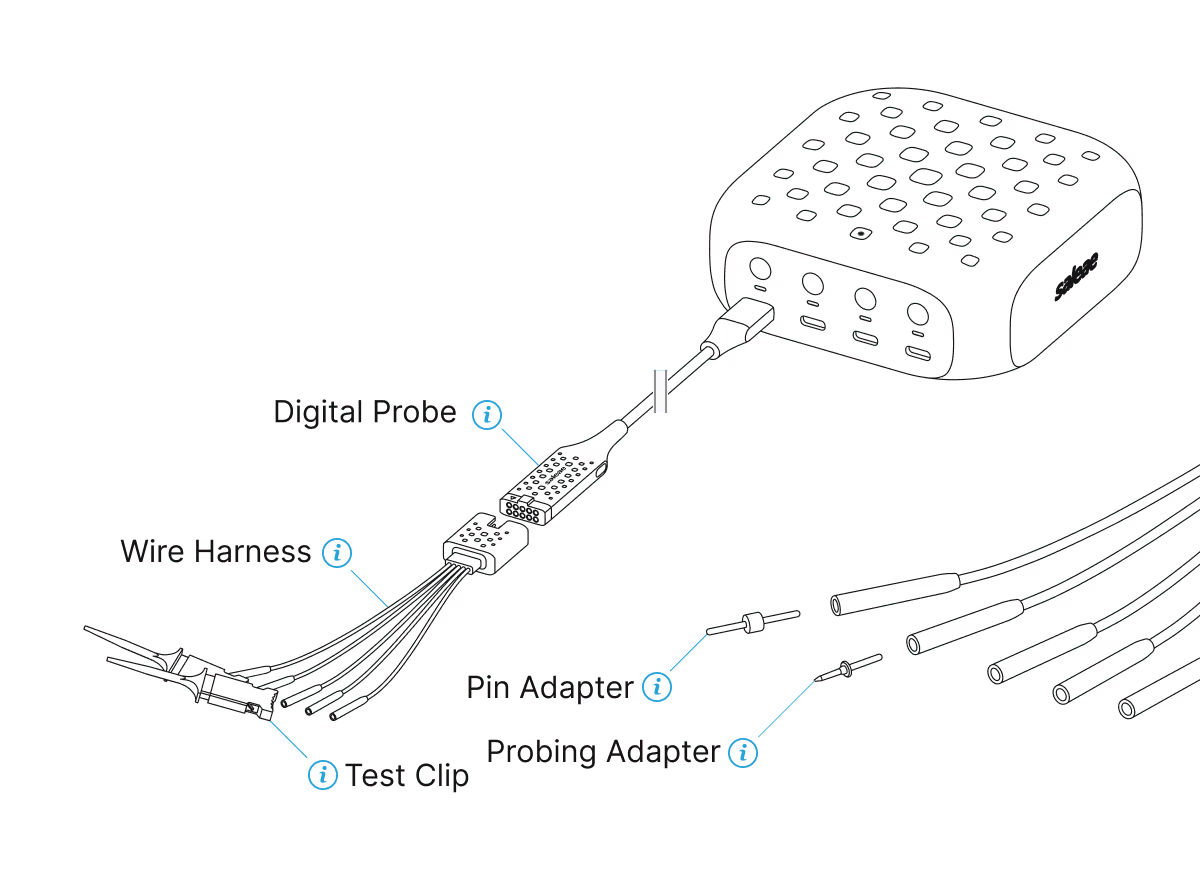
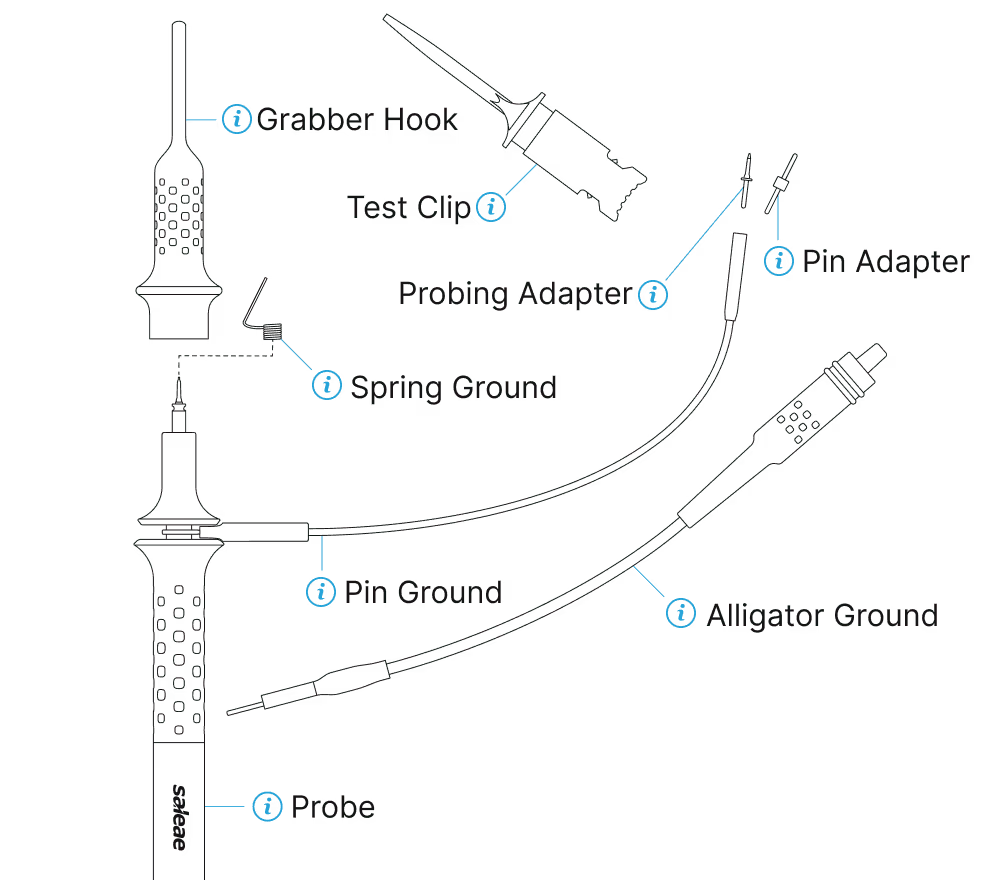
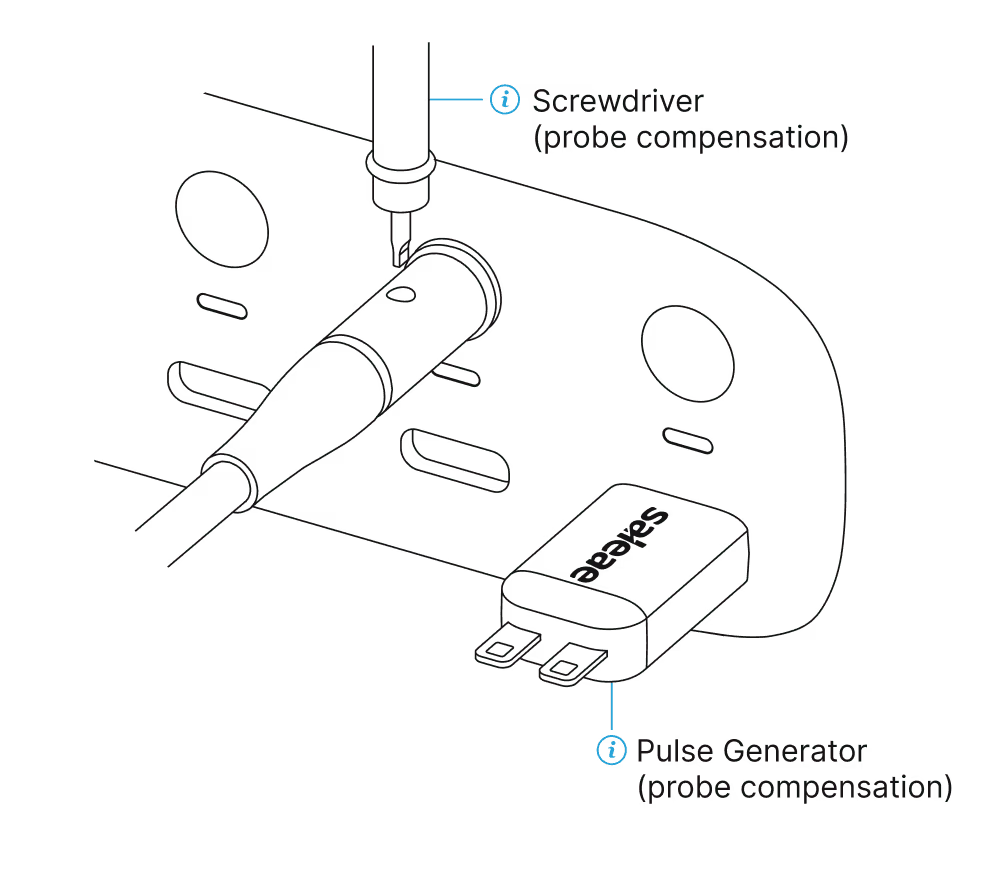
What's in the box.
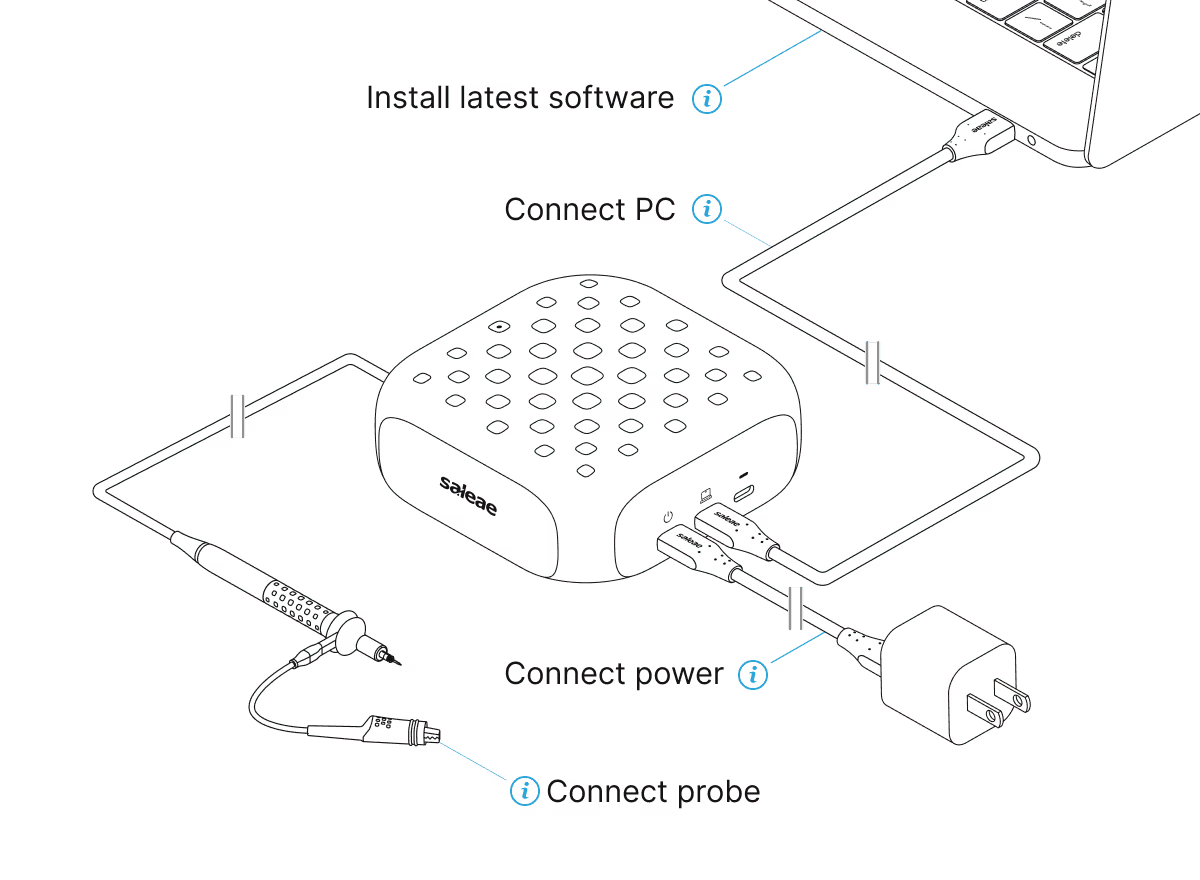
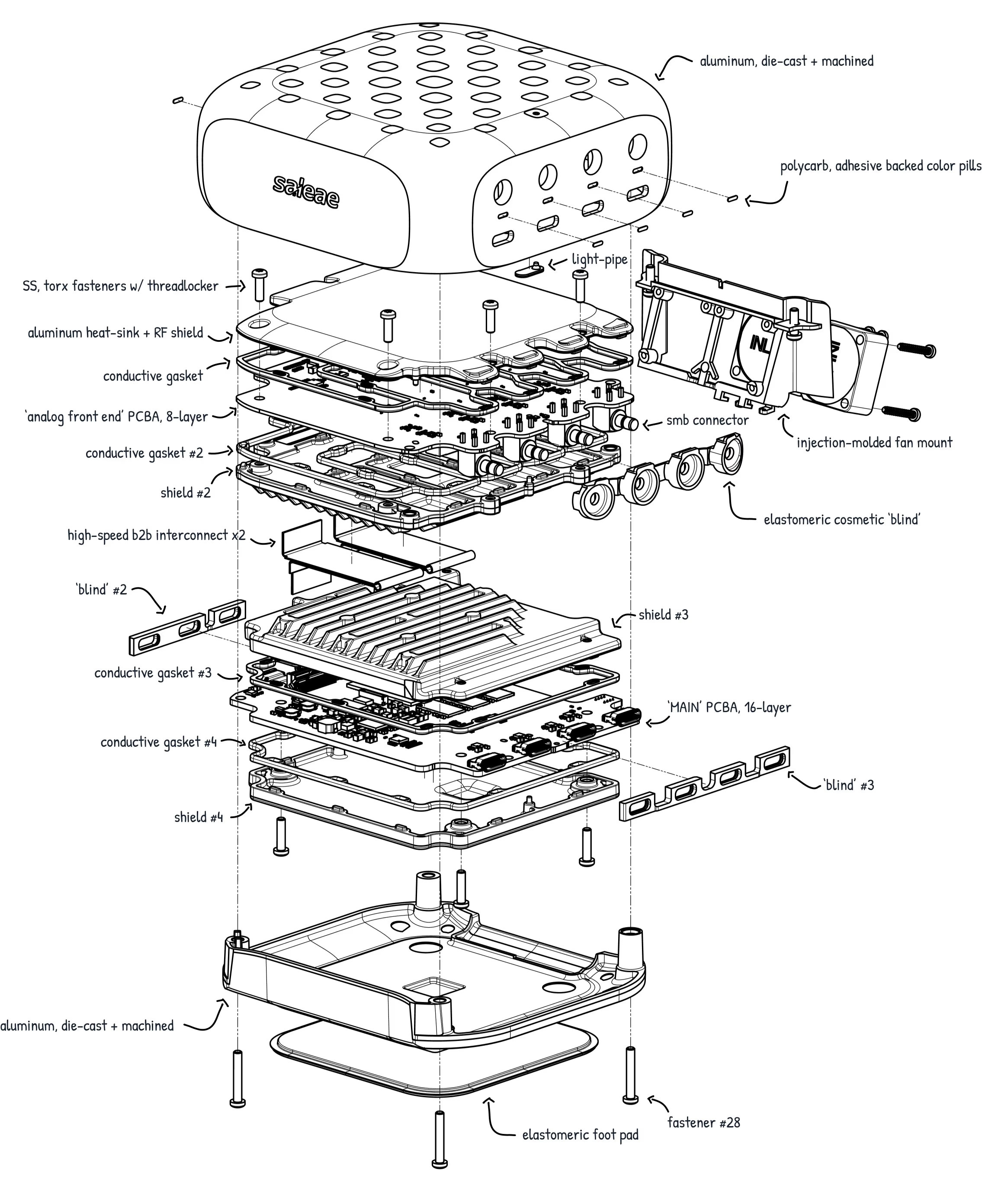
How this works.
Occasionally asked questions
I already have Logic. Should I get ✨Logic MSO✨?
Of course 🙂
It depends. If you have Logic, and an oscilloscope you really like, then Logic MSO can probably wait. (until Christmas, or your birthday, depending on which is sooner)
Upgrading to Logic MSO provides these benefits:
Up to 24 digital inputs (20 from Digital Probes, and 4 converted from the oscilloscope inputs)
Higher digital sampling rates (1.0 GS/s - 1.6 GS/s)
Much higher analog performance (variable gain/offset, 100 or 200 MHz bandwidth)
Looks awesome on your desk!
Best of luck on your decision. Let us know which way you end up going!
Are the Type-C connectors USB compliant?
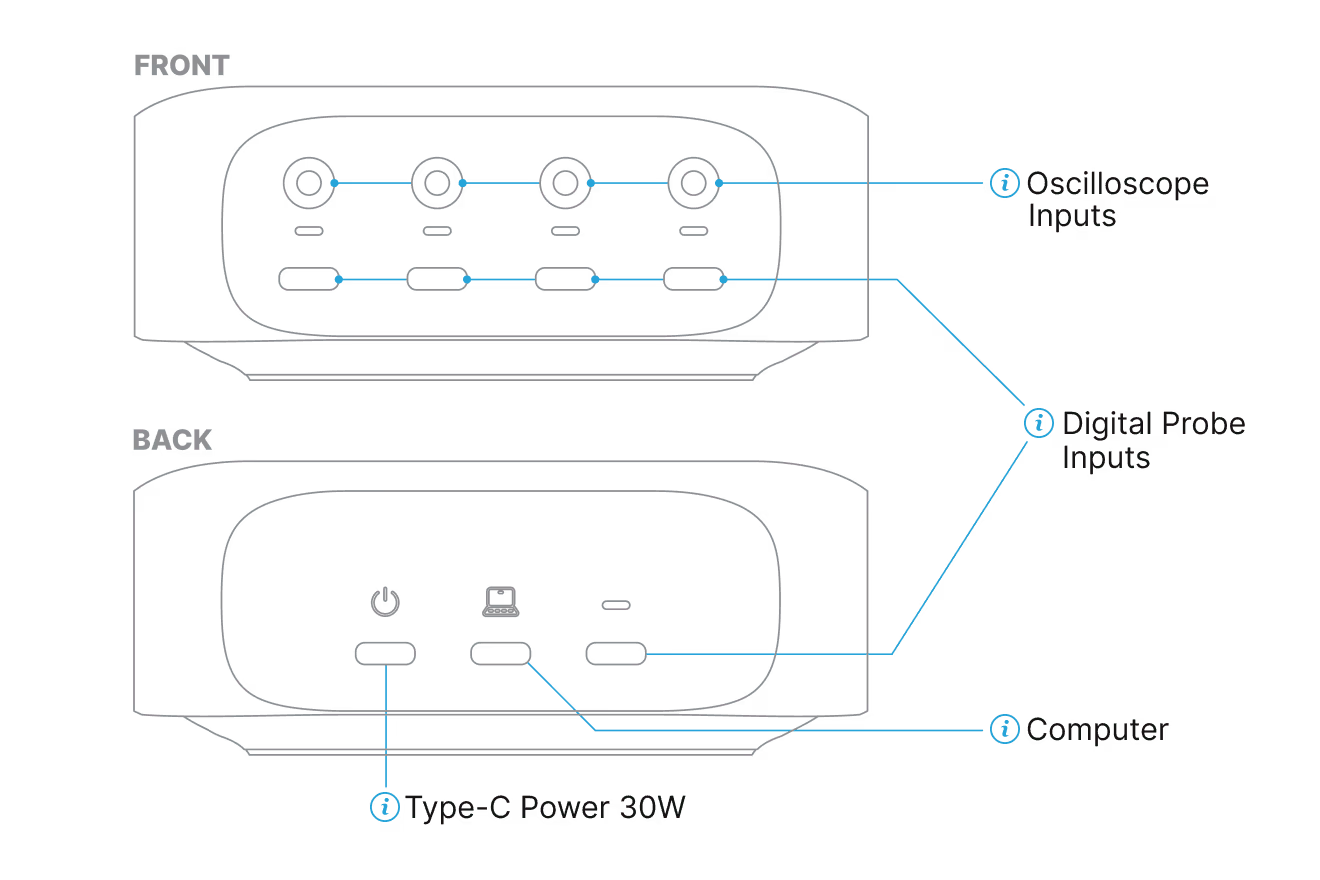
Yes. The ports use the USB Power Delivery (PD) standard, and if you want you can charge your phone with them. All USB I/O lines are held in high-z, until and unless a PD Alternate Mode connection is established with, for example, the Digital Probe. (this is similar to how HDMI can be used with Type-C by using PD’s Alternate Mode).
We chose USB Type-C connectors because we’d like to retain the option to introduce more types of probes in the future. For example, differential digital probes, trigger in/out, 10 MHz clock in/out, etc.
The Digital Probe has a USB Type-C connector & is likewise compliant; nothing bad will happen if you connect it to your PC, or a Type-C power supply, etc.
Should I get Logic, or Logic MSO?
We’ve tried to make Logic MSO the no-brainer choice (vs. Logic) for the majority of customers. That said, there are still a few reasons why Logic might be the better choice.
(1) Logic 8 is cheaper than Logic MSO.
(2) Logic 8 / Pro 8 / Pro 16 have analog recording on all their channels. This analog is relatively low sample rate, and has a fixed voltage range, but it still can be extremely useful for a number of situations, such as power supply sequencing.
(3) Logic MSO doesn’t yet have an automation API. We aim to have this rectified later this year (2025).
(4) You might already have developed testing infrastructure that uses Logic, and want to keep using it.
(5) Logic Pro 8/16 are able to stream a larger number of super-fast digital signals than Logic MSO.
Logic Pro 8/16 can stream raw samples at 500 MS/s on up to 6 channels; Logic MSO converts up to 24 signals sampled at 1 GS/s to run-length-encoding (RLE) prior to sending them to the PC. While the RLE efficiently uses bandwidth across many signals with different toggle-rates — while preserving the highest possible timing accuracy — it introduces overhead that limits the total number of transitions/second (0->1 or 1->0 = one transition) to 300 M.
Examples of what’s possible with Logic Pro 8/16, but not Logic MSO:
@ 500 MS/s (~ +/- 2 ns)
x2 sets of:
100 MHz SPI clock, continuous (200M transitions/second)
MOSI, changing every other clock on average (or more)
MISO, changing every other clock on average (or more)
(note that we can’t afford more inputs to cover the CS lines.)
-or-
@ 100 MS/s (~ +/- 10 ns)
x16 GPIOs, 20M transitions/second (e.g. 10 MHz square wave)
Examples of what’s possible with Logic MSO, but not Logic Pro 8/16:
@ 1 GS/s (~ +/- 1 ns)
x2 sets of:
25 MHz SPI clock, continuous
MOSI, changing every other clock on average
MISO, changing every other clock on average
CS, toggling every 80th clock on average.
-and-
x16 GPIOs, toggling at an average 6 MHz. (e.g. a 3 MHz square wave), pulses as short as ~5ns.
As long as Logic MSO stays under 300M transitions/second (T/s) in aggregate, it can support 24 digital channels (20 from Digital Probes and 4 converted to digital from the oscilloscope inputs) all sampled at 1 GS/s. (In the case of the 200 MHz model, sample rates are 1.2 GS/s for Digital Probes and 1.6 GS/s for digital-converted oscilloscope inputs).
Logic MSO vs Someone Else’s Scope™
Why you might choose to get Someone-Else’s-Scope:
(1) If you need bandwidth higher than 200 MHz, or some other specific performance metric we don’t meet.
(2) If you don’t care about embedded development / digital protocols / mixed signal, you can find scopes that have better price/performance options. (If you do care about these things, in our humble opinion, there is currently no alternative.)
(3) If you prefer a stand-alone, non-USB instrument. We get it. If you’re going to go up in your attic to measure something dangling from the ceiling, a stand-alone scope is probably going to get it done faster. Logic MSO is best as part of a workstation setup, such as if you’re developing a new product, although certainly the workstation could be mobile. You might consider both — an inexpensive stand-alone unit for when that makes sense, and Logic MSO for when your work is more involved and centers around the use of a computer (such as embedded development, PCBA debugging, etc).
(4) If you need one of the oscilloscope features that isn’t yet supported, and can’t wait. (See "What software features does Logic MSO have / not have".)
Why you might choose Logic MSO:
(1) You care a lot about mixed-signal design & verification — i.e. interaction of firmware, peripheral ICs, protocols, GPIOs, rail voltages, signal integrity, noise, power consumption, etc. Logic MSO is the best option for relativity long-time-horizon signals, which are not well supported by alternative MSOs. (A reasonable analogy is that that traditional scopes are "take a picture" focused, whereas Logic MSO is "take a video" focused.)
(2) You write firmware / you care a lot about protocol traffic. (for the reasons above)
(3) You had a good experience with Logic and are looking for that sort of experience in a scope. (If you’ve ever tried to actually use the logic analyzer on a traditional scope, you might have some idea why this matters.)
Scope XYZ seems to be cheaper for the same specs?
There are certainly cheaper oscilloscopes out there, but first double check a couple things:
(1) Does the bandwidth/sample rate/sample-depth decline with the number of oscilloscope channels used? If yes, does it matter to you? (Logic MSO does not, dedicated sampling rate and time aligned ADCs per channel)
(2) Is the logic analyzer probe/cable included? (Logic MSO includes 8 channels out of the box)
(3) Is the sample-depth and useability of the logic analyzer practical for your needs? (you might try and find a YouTube video of the cheaper scope in action)
(4) When using the oscilloscope inputs for protocol decoding, can you record a long, unbroken sequence? (Logic MSO can convert the scope inputs to digital and stream these in real time, for super-long, unbroken captures)
(5) Does the oscilloscope sample-depth meet your needs? (i.e. can it record a long-enough sequence? Logic MSO records either 100M or 1B high resolution analog samples depending on model, with digital being nearly unlimited continuous streaming.)
What software features does Logic MSO have / not have?
Current Logic MSO Features
Core scope experience (the basics)
Analog Trigger (edge & pulse, auto & normal, holdoff, adjustable hysteresis, force trigger)
Gain/offset control, bandwidth limiter, AC/DC mode
"Fixed mode" (zoom/pan without changing the dynamic range of the input)
Overlay mode & individual channel mode; Easy to read voltage rulers
Autoscale
Smooth, intuitive navigation; X zoom, Y zoom, XY zoom, marquee zoom
Save, export, presets
Capture modes: Live trigger, continuous free-run, & timer
Always on, deep trace history
High resolution single shot
Live scope & timeline measurements (built-in + user creatable)
User placeable cursors; live crosshair cursor
Timing markers
Timeline view
Range measurements
Continuous analog recording (low sample rate)
Digital
Continuous digital recording
Scope channels→digital (adjustable threshold & hysteresis; continuous stream)
Protocol (low-level) analyzers
High level analyzers
Searchable, copyable, & exportable data table
Terminal view
Trigger analog from a digital trigger
Marketplace
Community created high level analyzers & measurements
Logic 2 Software
Save & export
Headless Automation API using Python
Committed-to Logic MSO Features
Math Channel
FFT
Persistence View
Acquisition Modes (averaging, high resolution, peak detect)
Higher traces/sec
Trigger-on-protocol
What model of Logic MSO should I get?
For the more casual user, such as a student or builder-of-awesome-widgets, we suggest the 2-channel, 100 MHz, Standard model. Unless you have some specific requirements in mind, we think this will serve you very well.
For the professional user:
(1) Oscilloscope Bandwidth (100 MHz or 200 MHz)
Note that a 10 MHz square wave is constructed of sine waves; the fundamental sine wave is at 10 MHz, and there are harmonics at 30 MHz, 50 MHz, 70 MHz, 90 Mhz, and so on. The more of these harmonics that are within the oscilloscope bandwidth, the more accurately the digital signal can be recorded, for example, it’s edge, or rise-time. A common approximation is that the fastest measureable rise-time is 0.35 / BW; For Logic MSO this approximation yields 3.5ns @ BW = 100MHz, and 1.75 ns @ BW=200MHz.
Another reason to capture as many harmonics as possible is that they reveal the overshoot/undershoot/ringing behavior of the signal. As the bandwidth decreases, any such frequency components outside the bandwidth will be attenuated and will not appear in the recording.
Note also that the bandwidth is defined as the point when the original signal is attenuated by 3dB, e.g. 1 Vpp sine wave, at f=BW, will appear as small as ~ 0.707 Vpp. To the extent the BW of the instrument exceeds the frequency of interest, its amplitude will be more accurate.
The downside of more bandwidth, of course, is cost. If 200 MHz wouldn’t be sufficiently helpful for your work, get the 100 MHz unit.
(2) Number of channels (2 or 4)
More channels are only useful to the extent you want to see the behavior of more than two signals simultaneously, such as where signals are related to each other, or may affect each other. 3-phase motor control could be one such application.
Because Logic MSO comes with 8 digital inputs out of the box, the 2-channel units may be sufficient for your needs, even if you need to record numerous digital signals.
Note that the oscilloscope inputs can be converted to digital "in the background" and streamed continuously to the PC, so it may be more convenient to use the oscilloscope probes even for recording primarily digital signals, since you’ll be able to check for signal integrity issues at the same time as performing your digital debugging.
(3) ADC # of bits (9 or 12)
Because the oscilloscope can "zoom", i.e. has variable V/div, generally speaking you can probably get the measurement you want with 9-bits; The downside is that you may have to take more measurements, repeat captures, fiddle around more, etc., to achieve an equivalent result. Imagine if you had a 24-bit scope — you measurements would likely be accurate to ~ 10uV even at 100V/div.
The other reason you might want 12-bit is that on a 4K monitor 9-bit can look a bit low-res. This isn’t a super important technical reason but perhaps worth mentioning.
(4) Sample depth (100MS or 1000MS)
You triggered on something high-speed. Now you’re wondering — what lead up to this? The super-deep sample buffer gives you the ability to find out.
Note that this sample depth is only related to the oscilloscope inputs — digital signals, including oscilloscope inputs converted to digital, are streamed in real time, continuously. More sample depth helps with investigating the history of high-speed analog signals —- e.g. voltage level shifting, cross-talk, transitory signal, etc.)
(5) If you can’t decide, you have two choices 😁
(A) Get the cheapest one; then, later, if you decide want the fancier one, give your unit to the new hire, and order the fancy one for yourself.
— or —
(B) Seize the day and get the fanciest one possible.
Can I purchase via Mouser (or Amazon, etc)?
Not yet. Once we’re fully scale manufacturing and sell direct for a short period, Logic MSO will be more widely available.
How can I try out the software?
Unfortunately we don’t yet have a great way of providing a “demo mode” in the software. If you like, reach out to us and we can set up a screen share for you to try it out.
What’s the return policy and warranty?
The whole point of making a product should be to try and make a really good one.
If you regret your purchase, please do return it. (And perhaps give us some feedback). Just drop us a line and we’ll make the process as seamless as we can.
The warranty period is 3 years; it doesn’t matter how (or if) you blew up your MSO, we will fix/replace it.